Remodeling vs Renovation: What Is the Difference?
Updated: Sep 14
Remodeling vs Renovation: What Is the Difference?
Homeowners often use the words remodeling vs renovation interchangeably. While both can improve a home, they usually describe different types of work.
The simple distinction is this:
A renovation updates, repairs, or restores an existing space. A remodel changes the layout, structure, function, or use of that space.
Knowing the difference helps you plan the right project, set a realistic budget, understand whether permits may be required, and decide when hiring professionals is the right choice.

Remodeling vs Renovation at a Glance
Category | Renovation | Remodeling |
Main purpose | Refresh, repair, restore, or modernize | Change the layout, function, structure, or use |
Existing layout | Usually remains mostly the same | Often changes |
Room function | Usually stays the same | May change |
Plumbing and electrical | May be updated in place | May need to be moved or expanded |
Permits | Sometimes required | More commonly required |
Timeline | Often shorter | Often longer |
Budget | Can be more predictable when the layout stays in place | Can increase with structural and system changes |
Example | New flooring, paint, cabinets, and fixtures in the same layout | Removing a wall and redesigning a kitchen layout |
The bottom line: if the room works well but looks worn, dated, or damaged, renovation may be enough. If the layout or function of the room no longer works for your household, remodeling may be the better solution.
What Is a Renovation?
A renovation improves an existing room while keeping its basic layout and purpose largely unchanged. The goal may be to modernize finishes, repair damage, improve comfort, or restore the space.
Common renovation projects include:
Repainting walls, ceilings, trim, or cabinets
Replacing old flooring
Installing new countertops while keeping the kitchen layout
Replacing cabinet doors or hardware
Updating light fixtures
Replacing a bathtub with a similar model
Installing new tile around an existing shower
Replacing appliances in their current locations
Repairing drywall, water-damaged finishes, or worn surfaces
Updating a vanity, sink, faucet, or mirror
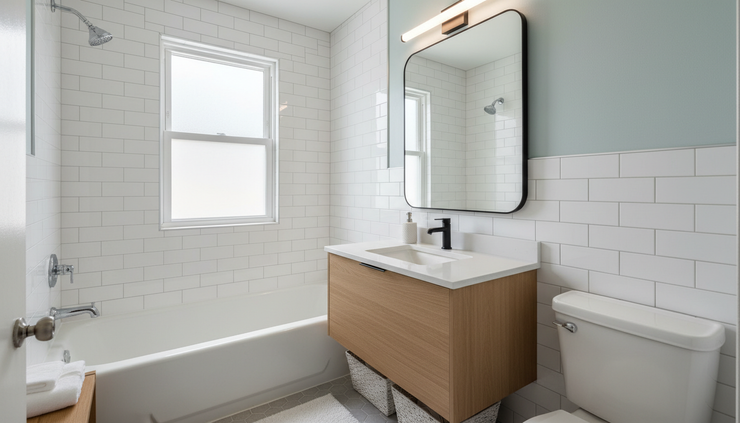
For example, a bathroom renovation may include new tile, a vanity, lighting, fixtures, paint, and ventilation improvements. If the toilet, shower, and sink remain in the same general locations, it is usually considered a renovation.
A renovation can still be a major undertaking. It may involve demolition, plumbing, electrical work, skilled labor, and material coordination. The key difference is that the room’s overall layout and function are not substantially changed.
What Is Remodeling?
Remodeling goes beyond surface-level updates. A remodel changes how a room is arranged, used, or connected to the rest of the home.
Common remodeling projects include:
Removing a wall to create an open kitchen and living area
Moving a kitchen sink, range, or refrigerator
Expanding a bathroom into an adjoining closet or hallway
Converting a garage into a living area, office, or bedroom
Turning an attic into usable living space
Combining two smaller rooms into one larger room
Creating a home office from an underused room
Adding a bathroom where one did not previously exist
Reconfiguring a basement into a guest suite or entertainment area
Building a home addition
A kitchen remodel may involve moving plumbing, adding new electrical circuits, redesigning cabinets, widening openings, improving ventilation, or changing the entire footprint of the room.
Because remodeling can affect framing, mechanical systems, safety requirements, and building codes, it often requires more detailed planning than a renovation.
The Main Difference: Does the Room Function Differently?
A helpful way to decide whether your project is a renovation or remodel is to ask:
Will this room work the same way when the project is finished?
If the answer is yes, the project is likely a renovation.
If the answer is no, the project is more likely remodeling.
For example:
Replacing countertops, cabinet hardware, flooring, and lighting in the same kitchen layout is generally a renovation.
Moving walls, relocating the sink, adding an island, and changing how people move through the kitchen is generally a remodel.
Many projects include both. A homeowner may remodel a kitchen by opening a wall and changing the layout, then renovate the finishes with new cabinets, counters, flooring, lighting, and paint.
Kitchen Renovation vs. Kitchen Remodel
Kitchen Renovation Example
A kitchen renovation may include:
Painting or refacing existing cabinets
Installing new cabinet hardware
Replacing countertops
Adding a backsplash
Installing updated appliances in the same locations
Replacing the sink and faucet
Updating lighting
Replacing flooring
The kitchen feels fresh and modern, but the basic layout remains intact.
Kitchen Remodel Example
A kitchen remodel may include:
Removing a wall between the kitchen and dining area
Moving the sink to a new island
Relocating gas or electrical connections for the range
Replacing cabinetry with a redesigned storage layout
Adding a pantry
Changing window or doorway locations
Adding structural support when opening a wall
Improving kitchen ventilation
This changes how the kitchen functions, how people move through it, and how the space supports daily routines.
Homeowners considering a kitchen project can explore Sina Remodel & Construction’s kitchen remodeling services.
Bathroom Renovation vs. Bathroom Remodel
Bathroom Renovation Example
A bathroom renovation may involve:
New tile
A new vanity
New fixtures
Updated lighting
Fresh paint
A new mirror
Replacing flooring
Improving ventilation
The layout remains mostly the same, but the bathroom becomes more comfortable, current, and functional.
Bathroom Remodel Example
A bathroom remodel may involve:
Expanding into a nearby closet or hallway
Moving the toilet or shower
Replacing a tub with a walk-in shower
Adding a double vanity
Reconfiguring the room for accessibility
Changing plumbing locations
Building a new bathroom in an unused area
These changes typically require more coordination because they can affect plumbing, electrical work, framing, waterproofing, ventilation, and permits.
Learn more about Sina Remodel & Construction’s bathroom remodeling services.
How Costs Differ
Renovation costs can be easier to manage when the existing layout stays in place. Fewer changes to plumbing, electrical systems, walls, and structural components often mean fewer construction variables.
However, renovation costs can still increase based on:
Material selections
Cabinet type
Countertop material
Flooring choice
Appliance upgrades
Tile and finish complexity
Existing damage behind walls or cabinets
Electrical or plumbing updates
Remodeling can involve additional costs because it may require:
More demolition
Framing changes
Structural work
Plumbing relocation
Electrical upgrades
HVAC changes
Architectural or engineering plans
Permit applications and inspections
Longer construction schedules
The best way to compare project options is to define the scope clearly before requesting estimates. “Replace kitchen cabinets in the same layout” is a very different project from “remove a wall, move the sink, and redesign the kitchen.”
When Do Remodeling Projects Require Permits?
Permit requirements depend on the location and scope of work. Cosmetic work may not require permits, while larger changes often do.
Projects are more likely to require permits when they involve:
Structural modifications
Wall removal
Plumbing relocation
Gas line work
Electrical panel, wiring, or circuit changes
New windows or doors
Room additions
Garage conversions
Changes to the use of a space
Always confirm requirements before work begins. A qualified contractor can help explain the scope of work, coordinate applicable permits, and plan for inspections when they are required.
When Should You Renovate?
Renovation is often the right choice when the room’s layout works but the finishes, fixtures, or condition need attention.
Consider renovation when:
The room functions well already
Your main goal is updating the appearance
You want to repair damage or wear
You plan to sell and want to improve presentation
You want a more manageable construction scope
You want to preserve the room’s existing footprint
The kitchen or bathroom needs better finishes, not a new layout
Renovation can provide a meaningful improvement without changing the core structure of the home.
When Should You Remodel?
Remodeling is often the better choice when the layout, size, or function of the space creates daily frustration.
Consider remodeling when:
The kitchen feels cramped or inefficient
The bathroom lacks storage, accessibility, or usable space
Walls interrupt traffic flow or block natural light
Your household needs another bedroom, office, or bathroom
You need to change the use of a room
The current layout does not support how you live
A deeper update is already needed because of structural, plumbing, or electrical issues
A remodel can solve functional problems that new finishes alone cannot fix.
Questions to Ask Before Starting
Before choosing between remodeling and renovation, ask yourself:
What is the real problem with the room?Is it primarily dated finishes, wear and tear, or poor functionality?
Will new finishes solve the issue?New cabinets and countertops may improve appearance, but they may not fix a kitchen with poor traffic flow.
What must stay and what can change?Decide whether the existing walls, plumbing locations, appliances, windows, and layout are fixed or flexible.
What is my ideal outcome?Think about storage, accessibility, daily routines, resale goals, and how long you plan to stay in the home.
What could be discovered during construction?Older homes may have hidden water damage, outdated wiring, plumbing issues, or uneven surfaces that should be included in project planning.
Do I need professionals for this scope?Hiring professionals is especially important for projects involving structural changes, electrical work, plumbing, waterproofing, ventilation, permits, or multiple trades.
How to Plan a Successful Project
Whether you are renovating or remodeling, planning helps reduce surprises.
Define the Scope Clearly
Write down what stays, what changes, and what the finished space needs to accomplish.
For example:
“Replace countertops and cabinets in the same kitchen layout.”
“Remove the wall between the kitchen and dining room, add an island, and relocate the sink.”
These are very different scopes, budgets, and timelines.
Prioritize the Most Important Improvements
Spend carefully on difficult-to-change items, such as:
Layout
Waterproofing
Electrical safety
Ventilation
Plumbing quality
Durable flooring
Cabinet functionality
Items such as paint colors, hardware, and decorative lighting are usually easier to update later.
Review Estimates by Scope, Not Only Price
When comparing estimates, make sure each contractor is pricing the same work. A lower estimate may exclude demolition, permits, disposal, materials, design work, inspections, cleanup, or potential repairs.
A clear proposal should identify:
Work included
Work excluded
Materials and allowances
Permit responsibilities
Payment schedule
Change-order process
Project timeline expectations

Remodeling vs Renovation: The Bottom Line
Renovation is generally the right choice when a room works well but needs repairs, updated finishes, or modernization.
Remodeling is generally the right choice when the layout, size, structure, or purpose of the space needs to change.
Both can improve comfort, functionality, and the overall appeal of a home. The best option depends on your home’s condition, your daily needs, and the goals you have for the space.
If you are planning a home renovation or remodel in San Diego County, contact Sina Remodel & Construction to discuss your project and request a free estimate.

Frequently asked questions
Frequently Asked Questions
What is the main difference between remodeling vs renovation?
Renovation updates, repairs, or restores a space while keeping its overall layout and function largely the same. Remodeling changes the layout, structure, use, or function of the space.
Is remodeling more expensive than renovation?
Remodeling can cost more because it may involve structural changes, plumbing relocation, electrical upgrades, engineering, permits, inspections, and a longer construction process. However, the final cost depends on the project scope and material choices.
Can a project be both a renovation and a remodel?
Yes. A kitchen project may include remodeling work, such as opening a wall and relocating a sink, along with renovation work, such as installing new cabinets, countertops, lighting, flooring, and paint.
Do renovations require permits?
Some do. Cosmetic updates may not require permits, but electrical, plumbing, window, gas, structural, or code-related work may require permits depending on the project and location.
When is hiring professionals important?
Hiring professionals is particularly important when a project includes structural changes, plumbing, electrical work, gas lines, waterproofing, ventilation, permits, or coordination between multiple trades.
Which is better for resale: remodeling or renovation?
Either can be beneficial when it solves real problems and suits the home. Renovation can make a home feel clean, current, and well maintained. Remodeling can improve usability when the existing layout or room function is a clear weakness.
The smartest choice starts with the real problem
Renovation and remodeling both improve a home, but they solve different problems. Renovation is best when the space works but needs a refresh. Remodeling is best when the space itself needs to change.
Before calling contractors, define the goal in one sentence. If the goal is “make this room look and feel updated,” start with renovation. If the goal is “make this room work differently,” plan for a remodel. That single distinction can make the budget clearer, the timeline more realistic, and the finished result much closer to what the home actually needs.



Comments